Foundation Crack Repair · New Jersey
Foundation Crack Repair in New Jersey
Not every foundation crack is a crisis — but a leaking one only gets worse. For over 20 years, the RDC team has sealed New Jersey foundation cracks permanently with polyurethane and epoxy injection, and told homeowners honestly when a crack is cosmetic versus structural. Every repair is backed by a lifetime transferable warranty.
- Free 7-day inspections
- Lifetime transferable warranty
- We fix the source, not upsell
- All 21 NJ counties
Crack that leaks?
Send us a photo, or better, book a free look. A crack that darkens or drips during rain is an active leak — we’ll tell you whether it’s a simple injection or something structural.
Get My Free InspectionLifetime transferable dry-basement warranty · Licensed & insured NJ contractor
Quick answer
Foundation crack repair in New Jersey seals a leaking or moving crack in a poured-concrete or block foundation by injecting it full-depth — flexible polyurethane for active water leaks, rigid epoxy to structurally re-bond a crack. Vertical and diagonal cracks usually leak and inject cleanly; horizontal cracks and stair-step cracks in block signal soil pressure and may need structural foundation repair. RDC diagnoses which is which on a free inspection and warranties the seal for the life of the structure. Call (908) 569-1876.
Solutions
Polyurethane vs. epoxy injection — and when to use each
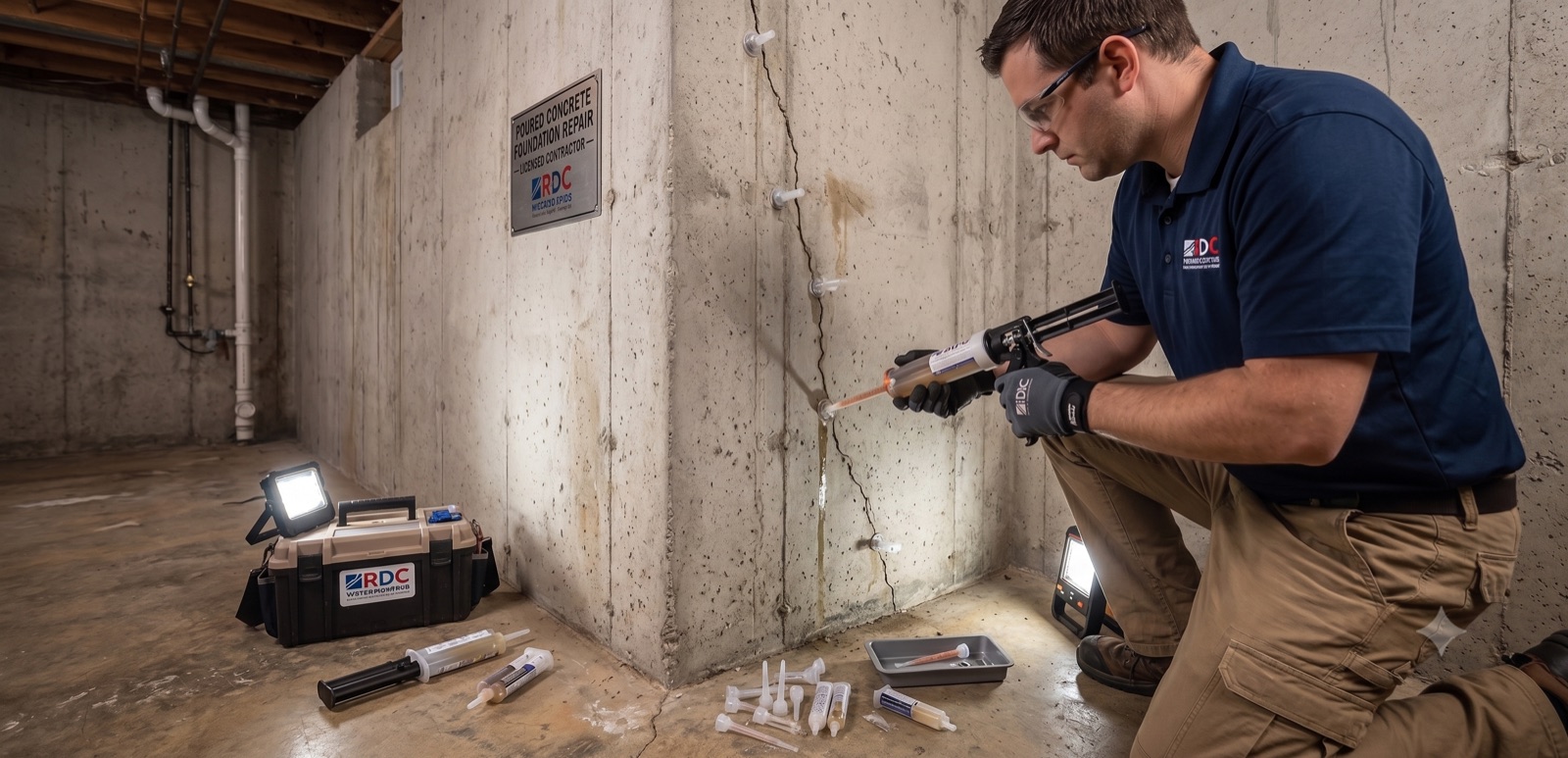
For a poured-concrete foundation, crack injection is the gold-standard repair: it fills the crack through the full thickness of the wall, not just the visible surface, so water has no path left. There are two injection materials, and choosing the right one is the whole job:
- Polyurethane injection: a flexible, expanding foam-like resin used to stop active water leaks. It cures fast, tolerates a damp crack, and stays flexible — so if the wall shifts slightly with seasonal soil movement, the seal moves with it and keeps holding. This is the workhorse for most leaking NJ cracks.
- Epoxy injection: a rigid, high-strength resin that actually re-bonds the concrete on both sides of the crack, restoring structural continuity. It’s used when the crack has some structural role and the wall is stable and dry enough to bond.
- Carbon-fiber reinforcement: for a crack that’s a symptom of pressure, injection is paired with carbon-fiber straps so it can’t reopen.
Block (CMU) foundations are different — you can’t injection-seal a hollow block wall the way you do solid poured concrete, so leaking block is usually addressed with an interior drainage approach. RDC tells you which foundation you have and which method fits, instead of forcing one product onto every house.
Warning signs
Which foundation cracks leak — and which are serious
The direction and shape of a crack tell you a lot about what’s causing it.
Vertical cracks
Usually from concrete curing and minor settling. They frequently leak but are rarely structural — the ideal candidate for polyurethane injection.
Diagonal cracks
Angled cracks, often from a corner or window, typically come from differential settling. Most inject and seal cleanly.
Horizontal cracks
A crack running sideways across the wall is a red flag — it means soil or water pressure is pushing the wall in. This is structural. See foundation repair.
Stair-step cracks in block
Cracks that zig-zag along the mortar joints of a block wall signal settlement or pressure and need evaluation, not just a patch.
A crack that weeps or darkens
Any crack that drips, darkens, or leaves efflorescence during rain is an active leak letting NJ groundwater in.
Widening or lengthening
A crack that grows over time — or is wider than about a quarter inch — needs a professional look before you seal it.
Causes
Structural or cosmetic? How to tell a serious crack from a harmless one
The question every homeowner really wants answered: is this crack a problem? New Jersey’s clay soils swell when wet and shrink when dry, and that constant movement — plus the freeze-thaw of our winters — is what opens most foundation cracks in the first place. Here’s how RDC reads them:
- Likely cosmetic / seal-only: a thin vertical or diagonal crack that isn’t widening and only matters because it leaks. Injection stops the water and you’re done.
- Likely structural / needs more: a horizontal crack, a stair-step crack in block, a crack wider than a quarter inch, one with the wall bowing or offset at the crack, or any crack that keeps growing. These mean the wall is under pressure and injection alone isn’t enough.
The honest truth is that most leaking cracks we see in NJ homes are the simple kind — a straightforward injection, not a five-figure structural job. Our reviewers repeatedly note that we told them a crack was minor when they feared the worst. But when a crack is a symptom of pressure, sealing it without addressing the cause just buys a few months. That’s why RDC diagnoses before it quotes — and why a leaking horizontal crack sends us straight to a conversation about foundation repair.
How it works
From free inspection to a sealed, warrantied crack
Free inspection
We assess the crack’s direction, width, and movement and confirm whether it’s a seal-only or structural situation — no pressure.
Fixed-price plan
You get an itemized, fixed-price quote for injection — and the right resin for your crack, not a one-size product.
Clean injection
Our crews set ports, inject polyurethane or epoxy full-depth, and confirm the crack is sealed edge to edge — usually in a single visit.
Lifetime warranty
You receive a written, lifetime transferable dry-basement warranty on the repair — and a wall that stays dry.
Why RDC Waterproofing
The team New Jersey trusts to tell them the truth about a crack
- 20+ years, 1,000+ 5-star reviews as the RDC brand New Jersey already knows.
- Honest diagnosis: reviewers repeatedly note we called a crack minor when they expected a disaster.
- Lifetime transferable warranty that stays with the home when you sell.
- Our own crews — trained RDC technicians, not rotating subcontractors.
- Licensed, bonded & insured New Jersey contractor, BBB A-rated.
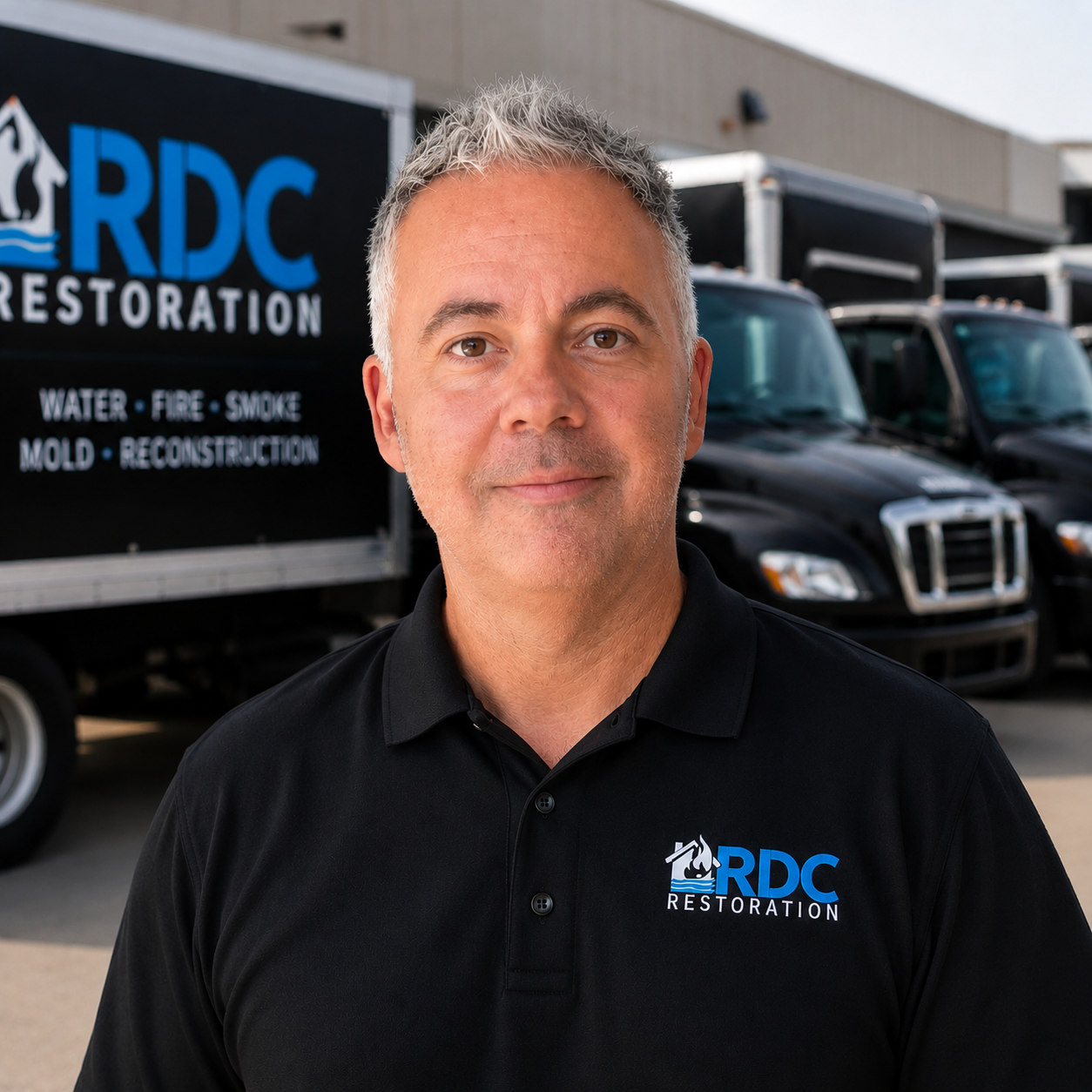
Led by founder Russell Calderone — 20+ years keeping New Jersey basements dry. Meet the team →
Where we work
Foundation crack repair across all 21 NJ counties
We seal leaking foundation cracks statewide from our Berkeley Heights and Piscataway hubs. See all service areas →
Foundation crack questions
Frequently asked questions
How much does foundation crack repair cost in New Jersey?
A single leaking crack sealed by injection is typically a few hundred dollars. Cost rises with the number of cracks, wall thickness, and whether the crack is structural and needs carbon-fiber reinforcement. RDC gives a fixed, itemized quote after a free inspection.
Should I use polyurethane or epoxy to fix a foundation crack?
Polyurethane is the choice for active water leaks — it’s flexible, tolerates a damp crack, and moves with seasonal shifts. Epoxy is rigid and re-bonds the concrete structurally when the wall is stable and dry. RDC selects the resin based on your crack, not a default product.
Which foundation cracks are dangerous?
Horizontal cracks, stair-step cracks in block, cracks wider than about a quarter inch, and any crack that keeps growing or has the wall bowing at it are structural warning signs. Vertical and diagonal cracks are usually just leaks. RDC tells you which you have.
Is a leaking crack cosmetic or structural?
A thin vertical or diagonal crack that only matters because it leaks is typically seal-only — injection ends it. A horizontal or widening crack means the wall is under pressure and needs structural repair, not just a seal. Diagnosis comes first.
Will the crack come back after it’s injected?
A full-depth polyurethane injection stays flexible and moves with minor wall shifts, so a properly sealed non-structural crack stays sealed — which is why RDC warranties it for the life of the structure. A crack driven by pressure needs the pressure addressed, or it can reopen.
Which parts of New Jersey do you serve?
All 21 NJ counties, from hubs in Berkeley Heights and Piscataway. Find your county on our service areas page.
Get your foundation crack inspected free
Honest diagnosis, a fixed-price quote, and a lifetime transferable warranty — anywhere in New Jersey.