Foundation Repair · New Jersey
Foundation Repair in New Jersey
A bowing wall or a settling foundation is a structural problem — and it never fixes itself. For over 20 years, the RDC team has stabilized New Jersey foundations with carbon-fiber straps, wall anchors, steel I-beams, and helical and push piers, backed by a lifetime transferable warranty. We tell you honestly what your wall needs, and what it doesn’t.
- Free 7-day inspections
- Lifetime transferable warranty
- We fix the source, not upsell
- All 21 NJ counties
Wall bowing or cracking?
A horizontal crack, a wall leaning in, or doors that suddenly stick can mean soil pressure or settling. We’ll measure it and diagnose it free — before it gets worse.
Get My Free InspectionLifetime transferable dry-basement warranty · Licensed & insured NJ contractor
Quick answer
Foundation repair in New Jersey stabilizes a foundation that is bowing, leaning, cracking, or settling. Bowing and leaning walls — driven by soil pressure and shown by horizontal cracks — are braced with carbon-fiber straps, wall anchors, or steel I-beams. A foundation that is sinking or settling is lifted and supported on helical or push piers driven to stable soil. RDC diagnoses the cause on a free inspection, engineers the fix, and warranties it for the life of the structure. Call (908) 569-1876.
Solutions
The right stabilization method for your foundation
Foundation problems come in two families: walls pushed inward by pressure, and foundations sinking from settlement. Each has proven engineering solutions, and matching the method to the failure is what separates a permanent fix from a cover-up. Here are the methods RDC uses across New Jersey:
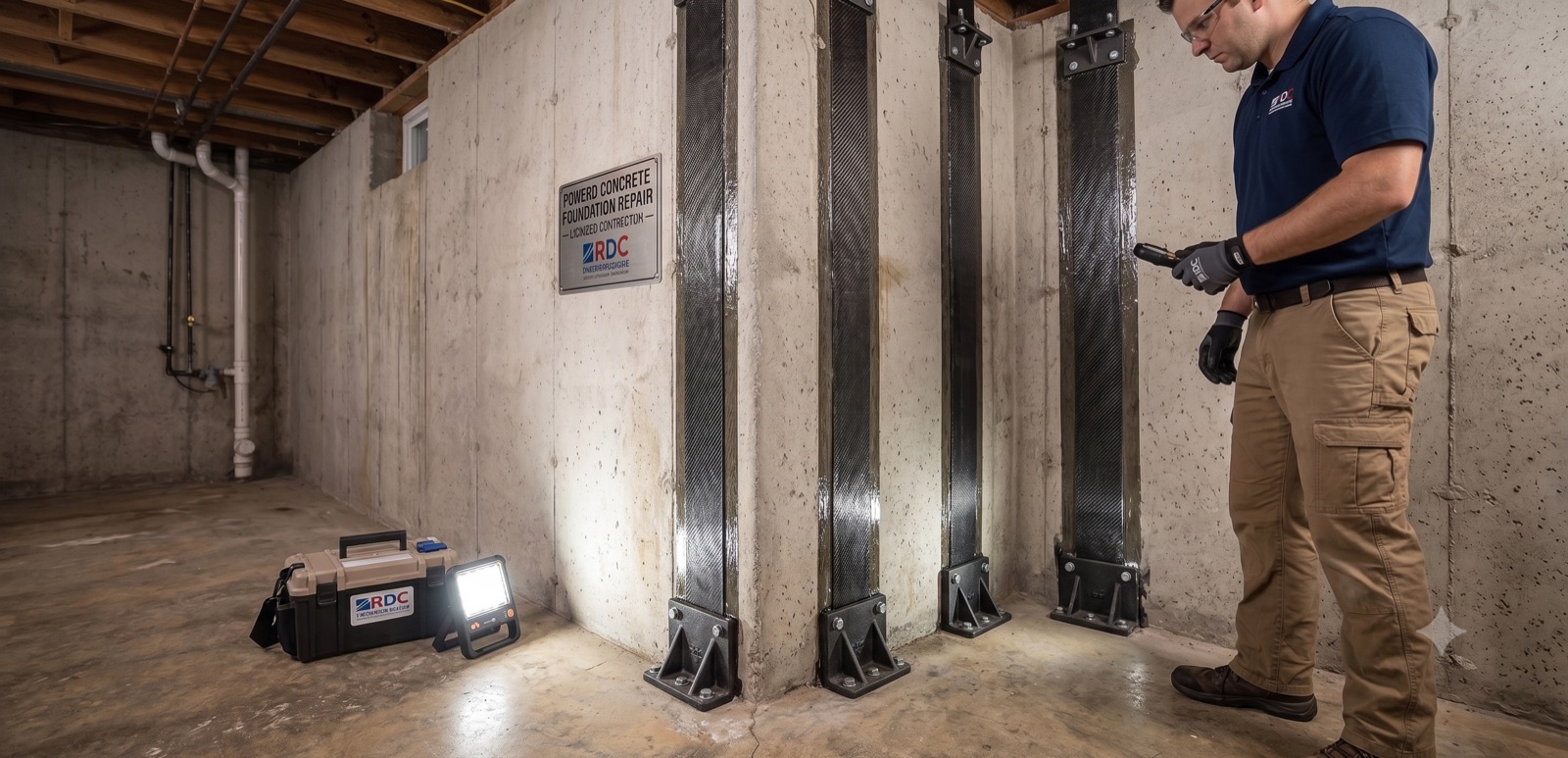
- Carbon-fiber straps: for walls with early-stage bowing (roughly under two inches of deflection). High-strength carbon-fiber strips are epoxied vertically to the wall to lock it in place. Low-profile, no excavation, ideal for finished basements.
- Wall anchors: for walls bowing further in. Steel anchors connect the wall to a plate set in stable soil out in the yard, and can be tightened over time to hold — and sometimes gradually straighten — the wall.
- Steel I-beams: vertical steel beams braced against the wall and the floor joists above, providing heavy reinforcement where carbon fiber isn’t enough and yard access for anchors is limited.
- Helical piers: screw-like steel piers turned deep into load-bearing soil to support and lift a settling foundation — excellent for lighter loads and tight access.
- Push (resistance) piers: steel piers hydraulically driven to bedrock or dense strata to underpin and lift a heavier settling structure.
Not every wall needs the biggest solution. A wall with slight bowing may need only carbon fiber, while a sinking corner needs piers. RDC recommends the least invasive method that will actually hold — we fix the source, not upsell.
Warning signs
Signs your New Jersey foundation needs repair
These are the symptoms of a foundation under stress. The earlier they’re caught, the smaller the fix.
Horizontal cracks = pressure
A crack running sideways across a foundation wall is the classic sign soil pressure is pushing the wall in. This is structural and needs bracing, not just sealing.
Bowing or leaning walls
A wall that curves or tilts inward — visible with a straightedge or a string line — is losing the fight against saturated NJ clay. It needs carbon fiber, anchors, or beams.
Stair-step cracks in block
Zig-zag cracks along mortar joints in a block wall point to settlement or lateral pressure.
Sticking doors & windows
Doors and windows that suddenly jam or won’t latch often mean the foundation has shifted or settled underneath.
Sloping or uneven floors
Floors that dip, slope, or feel bouncy can indicate a settling foundation losing support below.
Gaps at trim & the frame
Gaps opening where walls meet ceilings, or around window and door frames, signal ongoing movement in the structure.
Causes
What causes foundation failure in New Jersey?
New Jersey’s soil is the root of most foundation trouble. Our dense clay expands dramatically when it soaks up water and contracts when it dries — a relentless push-pull against foundation walls. Add a high water table, freeze-thaw cycles, and the volume that nor’easters and spring thaws deliver, and the pressure on a basement wall can exceed what it was built to resist. The main drivers:
- Lateral soil pressure: saturated, expanding clay presses against the wall from outside. This is what bows and cracks walls horizontally — the number-one structural failure we see.
- Hydrostatic pressure: a high water table adds water weight against the wall and under the footing, compounding the load.
- Differential settlement: when soil beneath part of the foundation compresses or washes out, that section sinks — cracking the structure and racking doors and floors.
- Poor drainage & grading: water pooling against the foundation keeps the clay saturated and the pressure high, which is why we so often pair structural repair with drainage improvements.
Because a bowing wall and a settling footing have different causes, they need different fixes — and a leaking horizontal crack is a structural signal, not just a crack to seal. RDC diagnoses the mechanism first, then engineers the repair. Where a project also calls for it, we coordinate related work like an egress window so the basement ends up safe, dry, and code-compliant.
How it works
From free inspection to a stabilized, warrantied foundation
Free inspection
We measure wall deflection and settlement, identify the cause, and determine the least-invasive method that will hold — no pressure.
Engineered plan
You get an itemized, fixed-price plan for the exact system — carbon fiber, anchors, beams, or piers — engineered to your wall.
Professional installation
Our crews install the stabilization cleanly and, where possible, work to straighten or lift the foundation back toward level.
Lifetime warranty
You receive a written, lifetime transferable warranty — and a foundation that holds.
Why RDC Waterproofing
The team New Jersey trusts with a structural repair
- 20+ years, 1,000+ 5-star reviews as the RDC brand New Jersey already knows.
- Least-invasive engineering: we recommend carbon fiber over piers when carbon fiber will hold — not the other way around.
- Lifetime transferable warranty that stays with the home when you sell.
- Our own crews — trained RDC technicians, not rotating subcontractors.
- Licensed, bonded & insured New Jersey contractor, BBB A-rated.
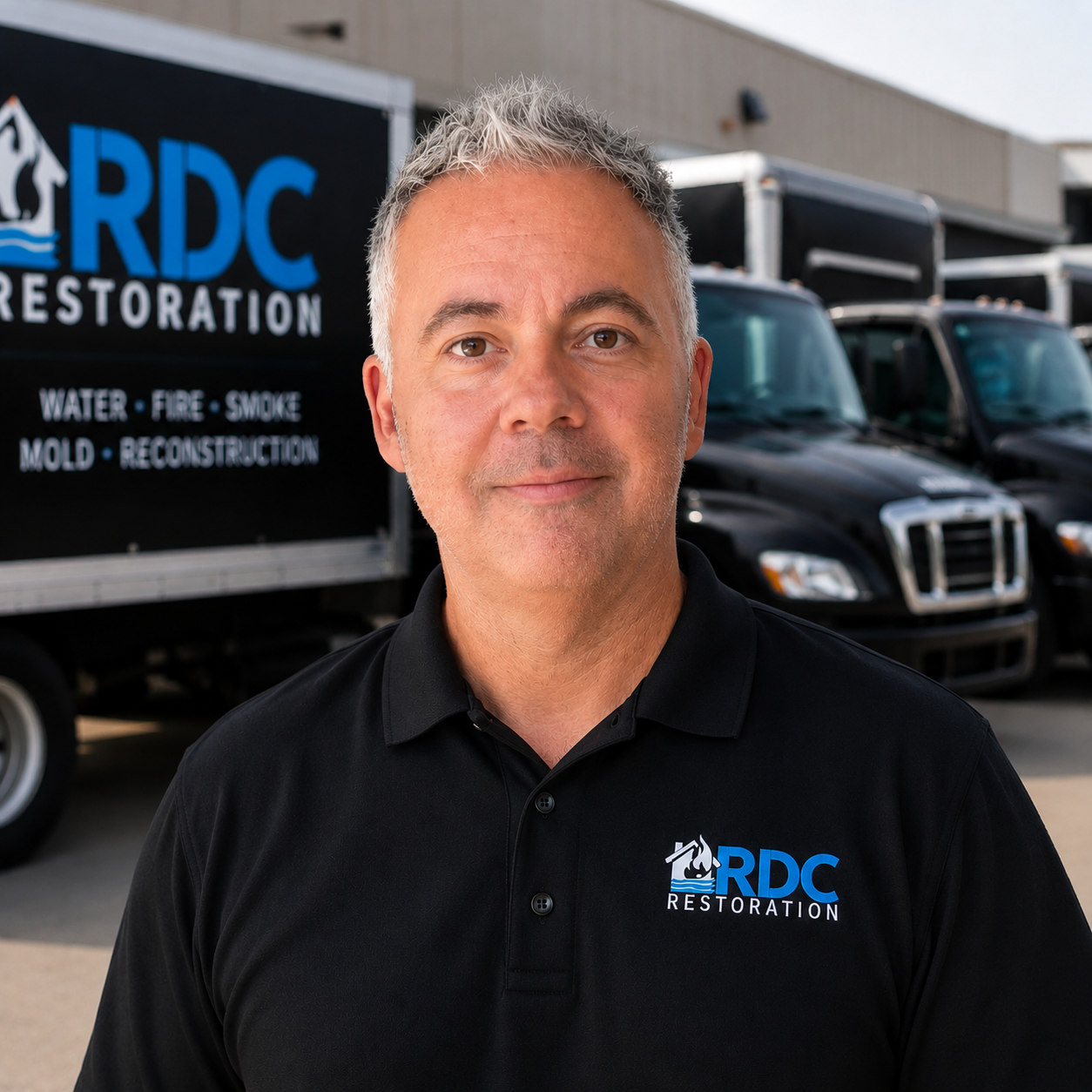
Led by founder Russell Calderone — 20+ years keeping New Jersey foundations sound. Meet the team →
Where we work
Foundation repair across all 21 NJ counties
We stabilize foundations statewide from our Berkeley Heights and Piscataway hubs. See all service areas →
Foundation repair questions
Frequently asked questions
How much does foundation repair cost in New Jersey?
It depends entirely on the method. Carbon-fiber straps on a lightly bowing wall are the most affordable structural fix; wall anchors, steel I-beams, and helical or push piers cost more because they involve more material and, for piers, excavation. RDC gives a fixed, itemized quote after a free inspection and recommends the least-invasive method that will hold.
Is a horizontal crack in my foundation serious?
Yes — a horizontal crack is the classic sign the wall is being pushed inward by soil pressure. It’s structural and needs bracing such as carbon fiber, anchors, or beams, not just crack sealing. Have it evaluated before it widens.
Carbon-fiber straps or wall anchors for a bowing wall?
Carbon-fiber straps are ideal for early-stage bowing — low-profile, no excavation, great for finished basements. Wall anchors suit walls bowing further in and can be tightened over time to hold or gradually straighten the wall. RDC recommends based on how far the wall has moved and your yard access.
What are helical and push piers used for?
Piers address a foundation that is settling or sinking, not one that is bowing. Helical piers screw into load-bearing soil for lighter loads and tight spaces; push piers are hydraulically driven to dense strata or bedrock to underpin heavier structures. Both stabilize and can lift a settling foundation.
Can a bowing wall be straightened, or just stopped?
Every repair first stops further movement. Depending on the method and how far the wall has moved, we can often recover some of the deflection over time — wall anchors in particular can be tightened gradually to pull a wall back toward straight. RDC sets honest expectations up front.
Which parts of New Jersey do you serve?
All 21 NJ counties, from hubs in Berkeley Heights and Piscataway. Find your county on our service areas page.
Get your foundation inspected free
Honest diagnosis, a fixed-price quote, and a lifetime transferable warranty — anywhere in New Jersey.