French Drain & Interior Drainage · New Jersey
French Drain Installation in New Jersey
An interior French drain is the most reliable way to keep a New Jersey basement floor dry — it captures water at the wall-floor joint and routes it to a sump before it ever reaches your slab. For over 20 years, the RDC team has installed engineered perimeter drainage backed by a lifetime transferable dry-basement warranty.
- Free 7-day inspections
- Lifetime transferable warranty
- We fix the source, not upsell
- All 21 NJ counties
Water along the floor?
Seepage where the wall meets the slab, water after every storm, or a floor that never fully dries — that’s exactly what an interior French drain solves. We’ll diagnose it free.
Get My Free InspectionLifetime transferable dry-basement warranty · Licensed & insured NJ contractor
Quick answer
French drain installation in New Jersey is the process of cutting a channel in the basement floor along the perimeter, laying perforated pipe in gravel below the slab, capturing water at the cove joint where the wall meets the floor, and routing it to a sump pump that discharges it outside. It is the most reliable, cost-effective interior basement waterproofing system for NJ’s clay soils and high water table. RDC installs it free-inspected, fixed-priced, and warrantied for the life of the structure. Call (908) 569-1876.
Solutions
How an interior French drain keeps your floor dry
An interior French drain — also called a perimeter drain, drain tile, or interior footing drain — is a channel installed under the basement slab, running the full perimeter of the foundation. In New Jersey’s dense clay soils and high water tables, hydrostatic pressure pushes groundwater up through the slab and in through the cove joint. Instead of fighting that pressure at the wall, an interior French drain gives the water a controlled path to travel and a place to go.
Here is exactly how RDC builds the system, and why each part matters:
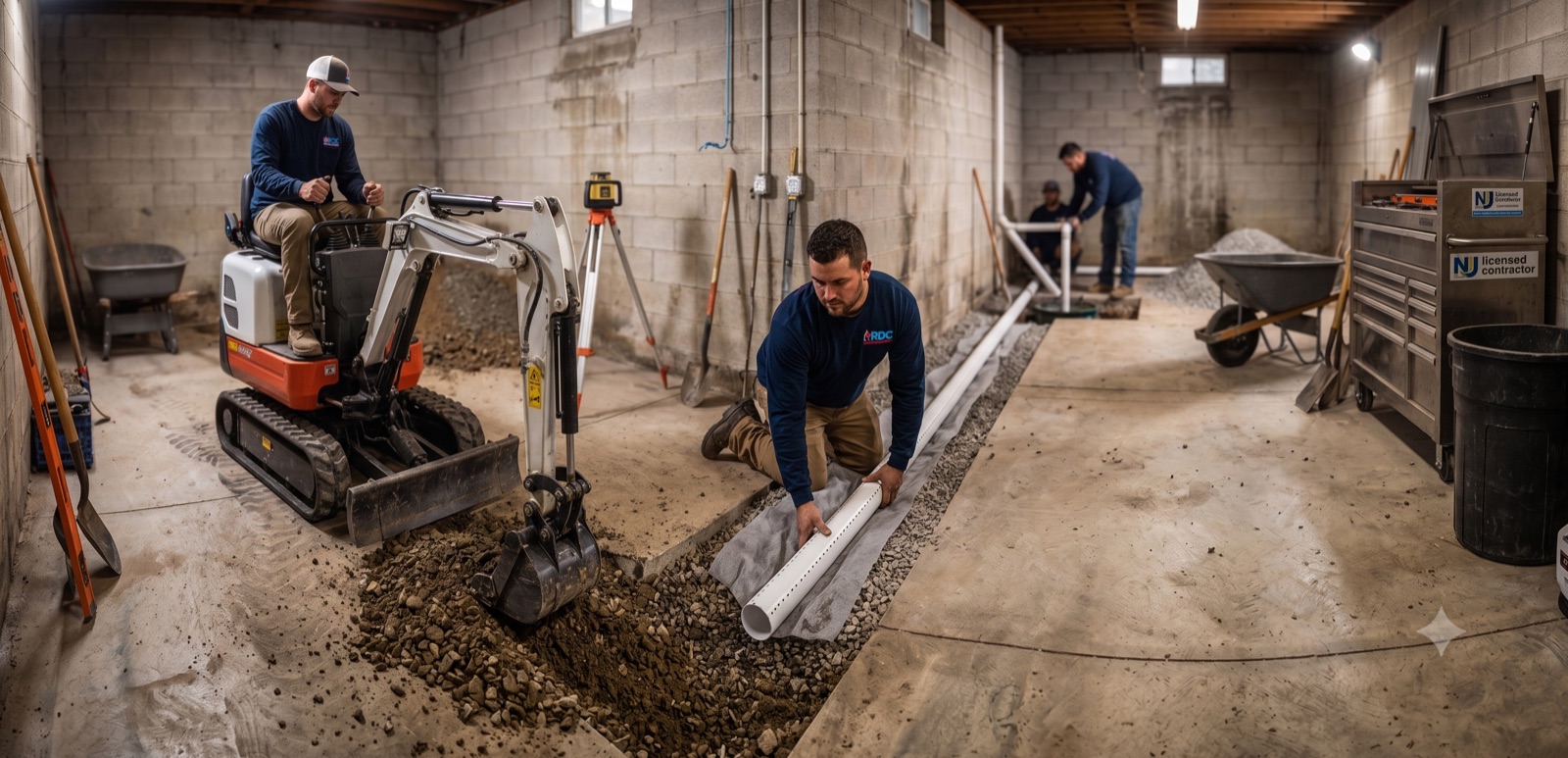
- The drain channel: we saw-cut a trench in the concrete floor around the perimeter and lay perforated PVC or corrugated pipe in a bed of clean stone, pitched to run downhill toward the sump.
- The cove-joint intake: a wall flange or drainage board captures water seeping through the block cores and at the wall-floor joint — the number-one entry point in NJ basements — and drops it straight into the drain.
- Discharge to the sump: the pipe carries collected water to a sump pump pit, which lifts it out and away from the foundation.
- Fresh concrete cap: we pour a clean concrete cap over the drain, leaving a finished floor — not a trench — and a small inspection access point.
The result is a floor that stays dry even during a nor’easter or spring thaw, because the water never gets the chance to pool on top of your slab. It manages the water that reaches the basement instead of pretending NJ groundwater can be sealed out from the inside.
Warning signs
Signs your New Jersey basement needs a French drain
If water reaches the floor rather than pouring through a single crack, interior perimeter drainage is usually the answer.
Water at the wall-floor joint
Seepage tracking in where the wall meets the slab — the cove joint — is the classic signature that calls for a perimeter drain.
Puddles after every rain
Standing water or damp patches that appear after storms and spring thaw mean hydrostatic pressure is forcing groundwater up under your floor.
Efflorescence along the base
A white chalky mineral crust low on block walls shows water is wicking through and evaporating at the floor line.
An older, failing drain
A clogged or collapsed original drain tile — or a system that only handles part of the perimeter — leaves the rest of the floor wet.
Musty smell near the slab
A damp, earthy odor at floor level means moisture is present even when you don’t see standing water.
Finishing a wet basement
Before you frame walls or lay flooring, an interior French drain protects the investment by keeping the slab reliably dry.
Causes
Interior French drain vs. exterior French drain
Homeowners often ask whether the drain should go inside or outside. Both exist, and they solve different problems in New Jersey homes:
- Interior French drain: installed under the slab along the inside perimeter. It requires no excavation, doesn’t disturb your landscaping or deck, works in any weather, and is dramatically more affordable. Because it collects water at the cove joint and routes it to a sump, it is the reliable default for the overwhelming majority of NJ basements.
- Exterior French drain: a footing drain installed outside the foundation during full excavation, usually paired with a waterproof membrane. It stops water before it reaches the wall — the right call when the wall itself is failing or when surface water must be intercepted. See exterior waterproofing.
Why does interior almost always win in NJ? Our clay soils drain slowly and hold water against the foundation for days after a storm. Excavating that clay is expensive and disruptive, and it doesn’t address water rising through the slab from the high water table. An interior perimeter drain routed to a dependable sump manages that water year-round — which is why it’s the workhorse of New Jersey basement waterproofing. RDC recommends based on what your home actually needs, not a sales script.
How it works
From free inspection to a dry, warrantied floor
Free inspection
We map where water enters, check the water table and cove joint, and confirm interior drainage is the right fix — no pressure.
Fixed-price plan
You get an itemized, fixed-price quote by linear foot for the exact perimeter your basement needs — nothing you don’t.
Clean installation
Our crews saw-cut, lay pipe in stone, tie in the sump, re-pour the floor, and leave the basement tidy — typically in a day or two.
Lifetime warranty
You receive a written, lifetime transferable dry-basement warranty — and a floor that stays dry.
Why RDC Waterproofing
The team New Jersey trusts to drain a basement right the first time
- 20+ years, 1,000+ 5-star reviews as the RDC brand New Jersey already knows.
- Full-perimeter systems: we drain the whole foundation, not just the wet corner, so water can’t reappear next door.
- Lifetime transferable warranty that stays with the home when you sell.
- Our own crews — trained RDC technicians, not rotating subcontractors.
- Licensed, bonded & insured New Jersey contractor, BBB A-rated.
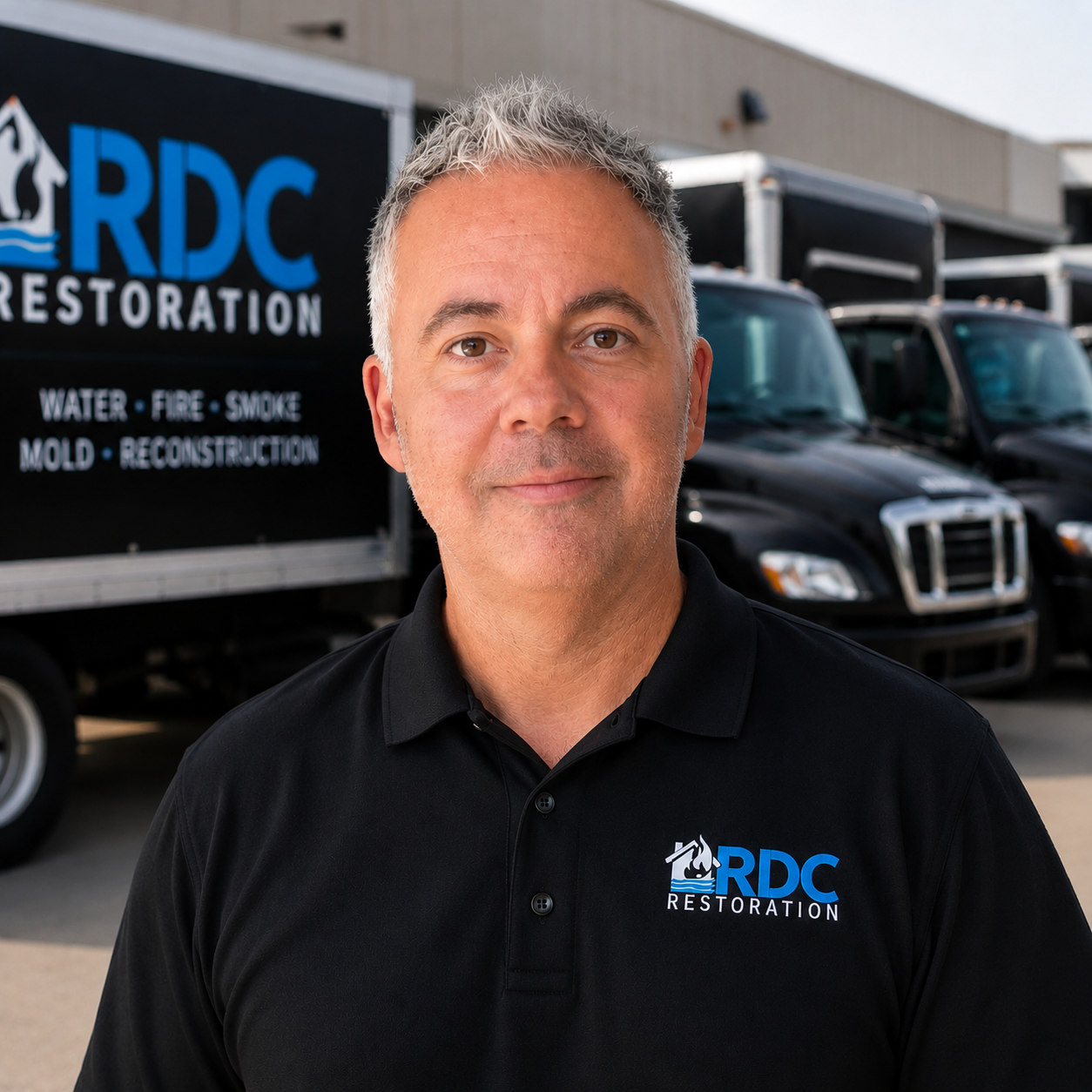
Led by founder Russell Calderone — 20+ years keeping New Jersey basements dry. Meet the team →
Where we work
French drain installation across all 21 NJ counties
We install interior drainage statewide from our Berkeley Heights and Piscataway hubs. See all service areas →
French drain questions
Frequently asked questions
How much does French drain installation cost in New Jersey?
Interior French drains are typically priced per linear foot of perimeter, so the total depends on how much of the basement needs drainage and how accessible the walls are. A partial run is a few thousand dollars; a full perimeter with a sump and battery backup runs more. RDC gives a fixed, itemized quote after a free inspection — and drains only the footage your basement actually needs.
Does an interior French drain really keep the floor dry?
Yes. A properly pitched perimeter drain captures water at the cove joint and routes it to a reliable sump pump, so it never pools on your slab. It is the most common and most cost-effective interior system for New Jersey basements, and RDC warranties it for the life of the structure.
Interior French drain or exterior French drain — which is better?
For most NJ homes, interior wins: no excavation, no landscaping damage, works in any weather, and it addresses water rising through the slab from our high water table. Exterior footing drains make sense when the wall itself is failing or surface water must be intercepted. RDC recommends based on your home, not a script.
Do you have to break up my basement floor?
We saw-cut a narrow channel around the perimeter to lay the pipe, then pour a clean concrete cap over it — you’re left with a finished floor, not an open trench. Most installations take a day or two, and we leave the basement tidy.
Can you add a French drain to a finished basement?
Usually yes. We remove only the bottom section of wall covering needed to reach the perimeter, install the system, and you refinish. We tell you up front exactly what has to move.
Which parts of New Jersey do you serve?
All 21 NJ counties, from hubs in Berkeley Heights and Piscataway. Find your county on our service areas page.
Get your basement inspected free
Honest diagnosis, a fixed-price quote, and a lifetime transferable warranty — anywhere in New Jersey.