Yard & Exterior Drainage · New Jersey
Yard Drainage in New Jersey
Most wet basements start in the yard. When roof and surface water pools against the foundation, it finds its way in. RDC Waterproofing designs and installs exterior drainage — grading, downspout extensions, dry wells, catch basins and yard French drains — that carries water away from your home before it ever reaches the wall, backed by a lifetime transferable warranty.
- Free 7-day inspections
- Lifetime transferable warranty
- We fix the source, not upsell
- All 21 NJ counties
Water pooling by the house?
Tell us what you’re seeing — a soggy lawn, downspouts dumping at the foundation, a driveway that sheds water toward the garage — and we’ll diagnose it free.
Get My Free InspectionLifetime transferable dry-basement warranty · Licensed & insured NJ contractor
Quick answer
Yard drainage in New Jersey is the practice of moving roof runoff and surface water away from your foundation so it can’t collect against the basement wall. Depending on the lot, that means re-grading soil to slope away from the house, extending downspouts, adding a dry well or catch basin, or installing a yard French drain or channel drain. Because surface water is one of the top causes of a wet basement, fixing drainage outside is often the cheapest real fix. RDC inspects free, finds where the water is going, and warranties the work across New Jersey. Call (908) 569-1876.
Solutions
Exterior drainage that moves water away before it becomes a basement problem
Water always follows gravity and pressure. On most New Jersey properties, the ground has settled over the years so it now slopes toward the house, downspouts empty a few inches from the foundation, and dense clay soil holds every inch of rain right where you don’t want it. The result is a saturated ring of soil around your foundation — and hydrostatic pressure that pushes that water through the cove joint and wall cracks into your basement.
Good yard drainage breaks that cycle. After a free inspection, RDC recommends one or a combination of these proven exterior systems:
- Grading & re-grading: re-sloping the first several feet of soil so the ground falls away from the foundation — the single most important, and most overlooked, drainage fix.
- Downspout & gutter extensions: carrying roof water in buried, solid PVC lines to a safe discharge point well away from the house instead of dumping it at the wall.
- Dry wells: a buried gravel-and-basin reservoir that collects concentrated roof or surface water and lets it soak slowly into the subsoil, away from the foundation.
- Catch basins & area drains: grated inlets set in low spots or at the base of a driveway that capture standing water and pipe it away underground.
- Channel drains (trench drains): a linear grated drain across a driveway, patio or garage apron that intercepts sheet water before it reaches the door.
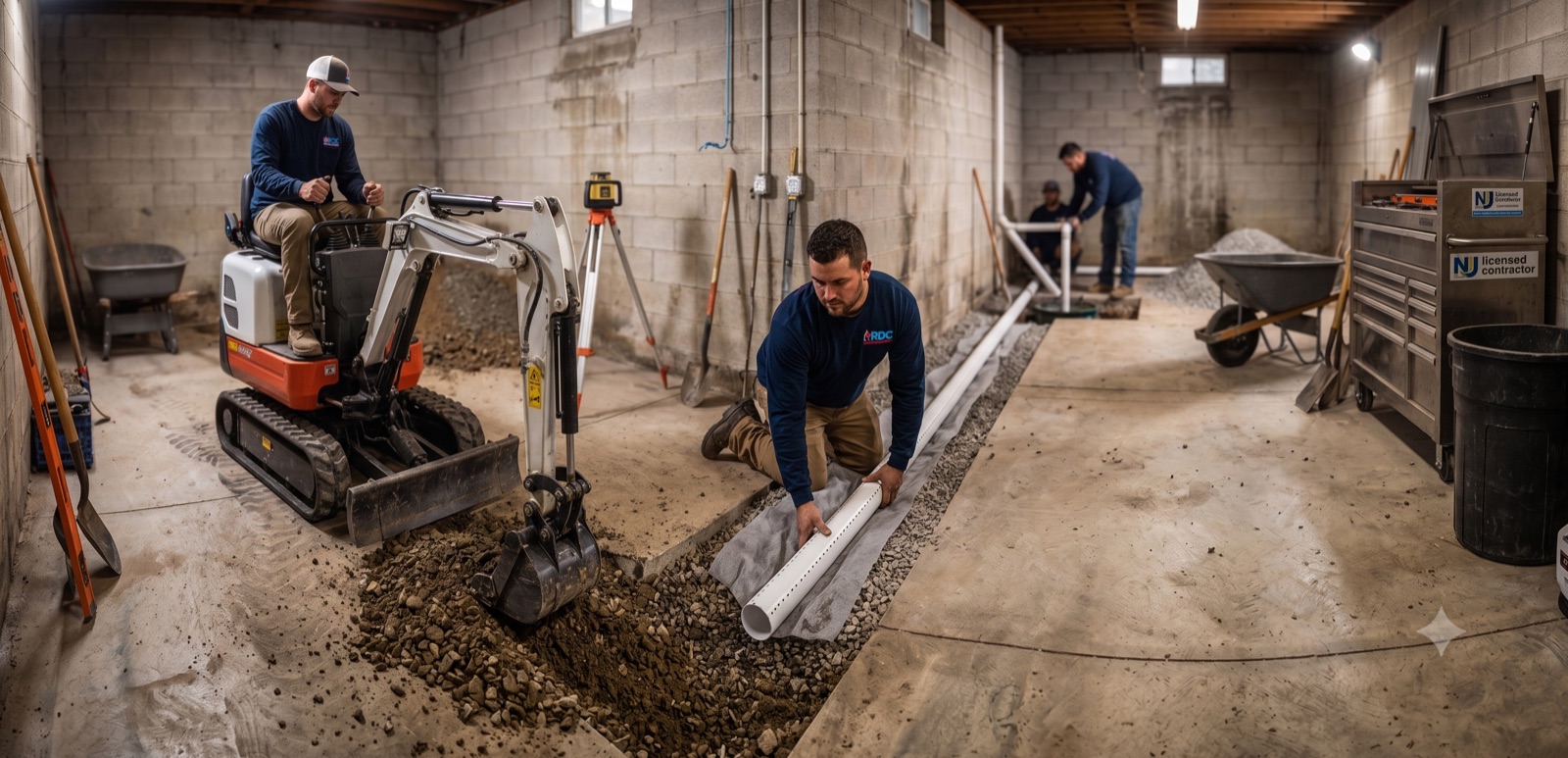
- Yard French drains: a gravel-wrapped perforated pipe that collects groundwater in a chronically soggy area and routes it to daylight or a dry well.
Exterior drainage and interior waterproofing solve different halves of the same problem. If water is already inside, pair yard drainage with exterior waterproofing or an interior system — see basement waterproofing for how RDC matches the fix to the source.
Warning signs
Signs your New Jersey yard needs drainage
Any one of these means surface water is collecting where it shouldn’t. Caught early, most are inexpensive to solve.
Pooling near the foundation
Puddles that linger along the house for hours or days after rain mean water is soaking down against the wall instead of draining away.
Downspouts dumping at the wall
Gutters that empty right beside the foundation concentrate hundreds of gallons of roof water in the worst possible spot.
A soggy, spongy lawn
Ground that stays saturated or squishes underfoot — or grows moss — is a sign water has nowhere to go in NJ’s clay soil.
Erosion & mulch washout
Channels cut in the soil, washed-out mulch, or gravel migrating downhill show where fast-moving water is running.
Water in the basement after storms
Seepage that tracks a heavy rain or spring thaw often traces straight back to surface water and grading — not the wall itself.
A driveway or patio that sheds toward the house
Hard surfaces that slope back at the garage or a basement entry funnel sheet water to the exact point you want it kept out.
Causes
Why yard drainage fails in New Jersey
New Jersey’s terrain and weather make surface water a chronic problem. Dense clay subsoil absorbs water slowly, so rain sits on top and pools. The water table runs high across much of the state, so there’s little room underground for more water to go. And nor’easters and fast spring thaws deliver volume in a hurry — more than tired gutters and settled soil were ever meant to handle. Drainage typically fails for four reasons:
- Negative grading: soil that has settled over decades until it slopes back toward the foundation, steering every rain to the wall.
- Roof water concentration: downspouts that discharge at the foundation put a roof’s worth of water into a few square feet of soil.
- Impermeable clay & a high water table: saturated ground can’t take on more, so water backs up at the surface and against the wall.
- Hardscape runoff: driveways, patios and walkways shed water fast, and if they pitch the wrong way it lands at the house.
Because the right fix depends on where the water actually comes from and where it can safely go, diagnosis is the whole game. RDC’s inspection reads your grade, your gutters and your soil — and, more than once, our reviewers mention we told them a simple grading and downspout correction was all they needed instead of a bigger job.
How it works
From free inspection to a dry, well-drained yard
Free inspection
We walk the property, read the grade, trace your downspouts, and find where water collects and where it can safely go.
Fixed-price plan
You get an itemized, fixed-price quote for the exact drainage system your lot needs — nothing you don’t.
Clean installation
Our own crews re-grade, bury lines, and set basins and dry wells cleanly, then restore the surface and seed.
Lifetime warranty
You receive a written, lifetime transferable warranty — and a foundation that stays dry from the outside in.
Why RDC Waterproofing
The drainage team New Jersey trusts to fix the real problem
- 20+ years, 1,000+ 5-star reviews as the RDC brand New Jersey already knows.
- Honest diagnosis: reviewers repeatedly note we solved the water problem for less than they expected.
- Lifetime transferable warranty that stays with the home when you sell.
- Our own crews — trained RDC technicians, not rotating subcontractors.
- Licensed, bonded & insured New Jersey contractor, BBB A-rated.
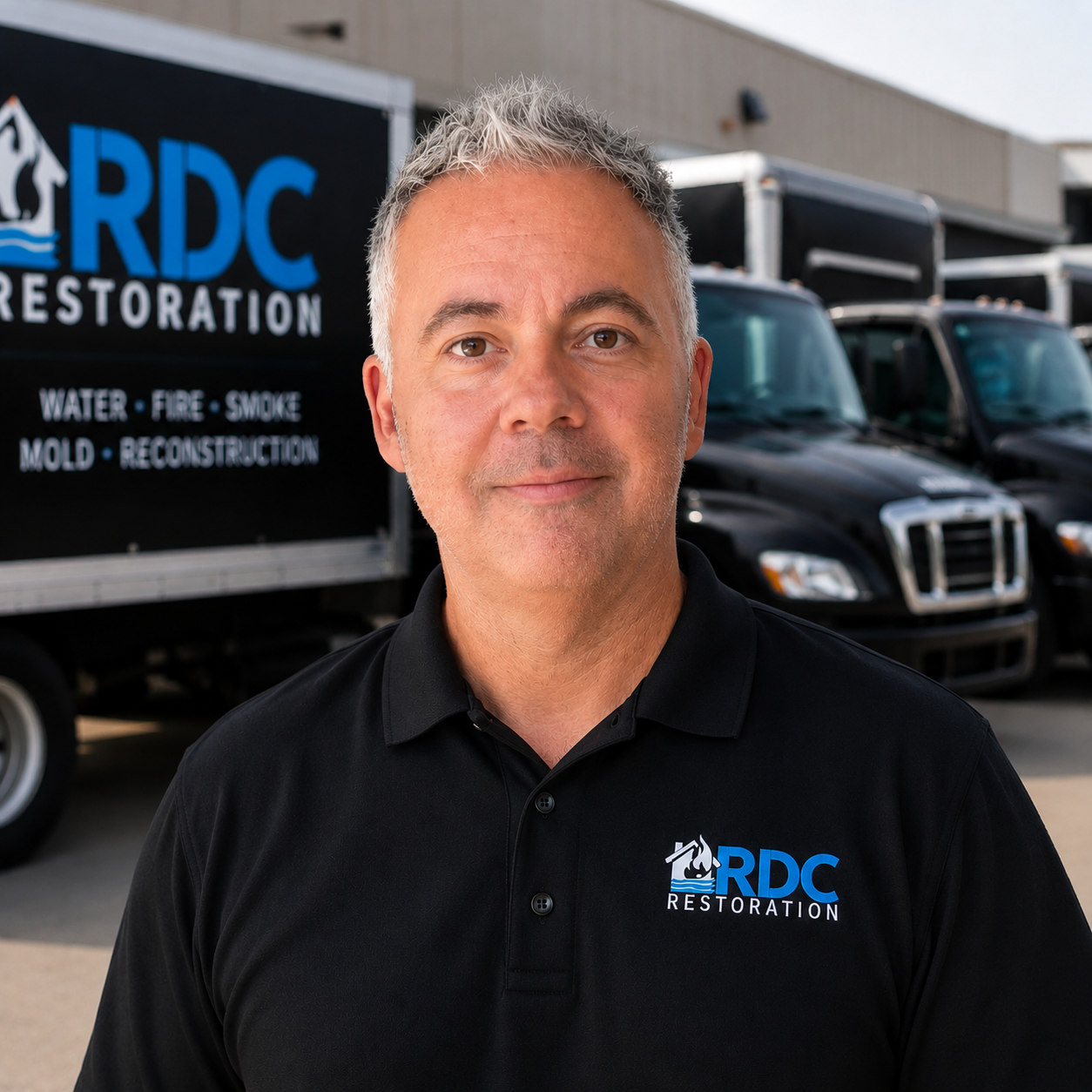
Led by founder Russell Calderone — 20+ years keeping New Jersey basements dry. Meet the team →
Yard drainage questions
Frequently asked questions
How much does yard drainage cost in New Jersey?
Simple fixes like downspout extensions or re-grading a section of soil run a few hundred to a couple thousand dollars. A full system with a dry well, catch basins, and buried yard French drains costs more, depending on linear footage and how far the discharge point sits. RDC gives a fixed, itemized quote after a free inspection — and recommends only what your lot actually needs.
Will fixing my yard drainage stop my wet basement?
Often, yes. Surface water and roof runoff are among the most common causes of a wet basement, so re-grading and moving downspout water away frequently solves the problem on its own or dramatically reduces it. If water is already entering through the wall or cove joint, we pair drainage with interior or exterior waterproofing.
What’s the difference between a yard French drain and an interior French drain?
A yard French drain is a perforated pipe in gravel buried in the lawn to collect groundwater and surface water outside. An interior French drain sits under the basement slab along the perimeter to manage water that reaches the foundation. They address different points in the water’s path — and many homes benefit from both.
Is a dry well or a catch basin better for my property?
It depends on your soil and where the water can go. A dry well stores and slowly releases concentrated roof water into permeable subsoil; a catch basin captures standing surface water and pipes it away to a lower discharge point. In NJ’s clay soils we often combine them. Our inspection determines which fits your lot.
Do you need a permit for yard drainage in New Jersey?
Some townships regulate where stormwater can be discharged and require a permit for larger drainage or dry-well work. RDC knows the local requirements across New Jersey and handles the details so your system is compliant and won’t send water onto a neighbor’s property.
Which parts of New Jersey do you serve?
All 21 NJ counties, from hubs in Berkeley Heights and Piscataway. Find your county on our service areas page.
Get your drainage inspected free
Honest diagnosis, a fixed-price quote, and a lifetime transferable warranty — anywhere in New Jersey.